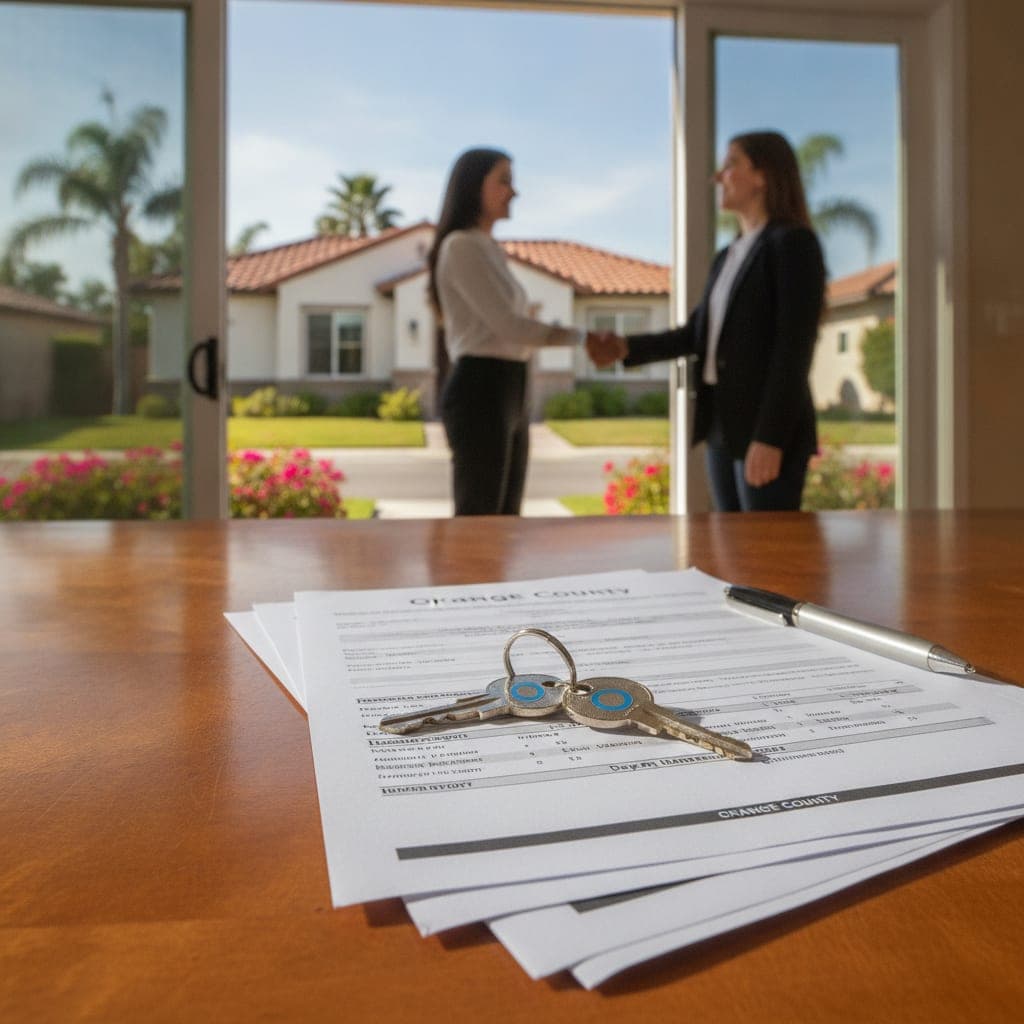

SoCal at a glance, Spring 2026
Southern California's housing market in 2026 is a story of regional divergence. Coastal LA and OC remain expensive but slow-moving. Inland Empire is the most active market by transaction volume, with prices catching up to the rest of SoCal. San Diego sits in between, strong fundamentals, tight inventory, mostly retail-driven.
Statewide median: roughly $850K. SoCal medians by metro:
| Metro | Median single-family | YoY change | Days on market |
|---|---|---|---|
| Los Angeles County | $900K | +1% | 38 |
| Orange County | $1,250K | +2% | 35 |
| San Diego County | $950K | +3% | 32 |
| Riverside County | $620K | +4% | 42 |
| San Bernardino County | $560K | +4% | 45 |
| Ventura County | $850K | +2% | 36 |
The 4% YoY gains in the Inland Empire are notable. While coastal SoCal is mostly flat, IE buyer demand from priced-out OC and LA sellers pushed Riverside and San Bernardino prices up faster than the rest of the region in 2025.
The rate environment
30-year mortgage rates hover in the 6.5-7.25% range as of Spring 2026. That's well above the 3% bottom of 2021 but well below the 8%+ peak of late 2023. The market has roughly settled into this range, and most retail buyers have re-anchored their expectations.
A few rate-driven dynamics worth watching:
- Lock-in effect persists: ~45% of California homeowners with mortgages have rates below 4%. They're not selling to buy at 6.5-7%. This continues to suppress inventory.
- Buyer affordability is rate-sensitive: every 50bp rate move shifts maximum purchase price ~5% for the median buyer.
- Cash buyers are unaffected: the cash-buyer share of California transactions has held steady around 25-30% of all sales, with concentration in older properties and distressed situations.
Inventory: still tight, slowly improving
SoCal active listings sit around 2.0 months of supply, up from 1.4 months at the trough but still well below the 5-6 months that defines a balanced market.
Where inventory is loosening:
- Inland Empire: 2.4 months supply, the most balanced SoCal submarket
- Coastal LA $2M+: 3.5 months supply at the high end (rate-sensitive buyer pool)
- Coastal SD $1.5M+: 3.0 months supply
Where inventory remains tight:
- OC under $1.5M: 1.6 months
- LA $700K-$1.5M: 1.8 months
- San Diego $700K-$1.2M: 1.7 months
For sellers, low inventory is a tailwind on price. The headwind is on the buyer side: same buyers competing for limited inventory are also paying more in mortgage interest, which makes them tougher negotiators.
Insurance: a real factor now
California's homeowner insurance market is in real disarray. State Farm, Allstate, and other major carriers have either pulled back from California new business or restricted coverage in fire-prone areas. The FAIR Plan, California's insurer-of-last-resort, has tripled enrollment since 2020.
For SoCal sellers, this affects several things:
- Insurability of fire-zone properties: the canyons, foothills, and inland fire zones (parts of Trabuco, Modjeska, Anza, Forest Falls, the LA mountains) are increasingly hard to insure. Buyers can't get loans without insurance, so retail listings in these areas are slowing.
- Cost basis for buyers: a $600K Inland Empire home with $5,000/year insurance prices very differently from one with $12,000/year insurance. Buyers are doing the math.
- Cash-buyer impact: cash buyers don't need insurance to close, so fire-zone properties that can't sell retail are routing to cash sales more often.
Specifically affected SoCal areas:
- East San Diego County (Alpine, Ramona, Julian)
- Riverside foothills (Idyllwild, Anza, Aguanga)
- San Bernardino mountains (Lake Arrowhead, Big Bear, Crestline)
- LA foothills (Altadena, La Cañada, parts of Pasadena, Sunland-Tujunga)
- Ventura/Conejo backcountry
- OC canyons (Trabuco, Coto de Caza inland portions)
What sellers should focus on by metro
Los Angeles County: Inventory tight in the $700K-$1.5M range. Listings at this price band that show well still get multiple offers. Distressed inventory and condition-issue properties are routing more to cash buyers.
Orange County: Slowing at the high end (>$2M), strong in the middle ($1M-$1.8M). South OC and central OC are most active retail markets. North OC mixes well with cash-buyer demand.
San Diego County: Strong fundamentals, tight inventory in core San Diego. North County coastal stays expensive but slow at $1.5M+. Inland North County (Escondido, Ramona) sees more cash activity due to insurance issues.
Inland Empire: The most active SoCal market by volume. Riverside and Corona move fast. Hemet, San Jacinto, Beaumont have older inventory routing more to cash buyers. San Bernardino has the most distressed inventory in SoCal.
Ventura County: Quieter market. Thousand Oaks and Simi Valley retail stable. Coastal Ventura (Oxnard, Ventura proper) sees mixed retail and cash activity.
Outlook for the rest of 2026
Three variables define SoCal through year-end:
-
Mortgage rates: a sustained drop below 6% would unlock pent-up retail demand. A rise above 7.5% would slow further. Most likely scenario: range-bound 6.25-7.25%, with prices flat-to-up 1-3% in coastal markets and up 3-5% in IE.
-
Insurance market resolution: California's regulatory response to the insurance crisis is still developing. Any meaningful improvement (FAIR Plan reform, return of major carriers) would reopen fire-zone retail markets.
-
Cash-buyer share: expect continued strength. Distressed, condition-issue, and timeline-pressured sellers increasingly route to cash buyers as the only viable exit. SoCal's cash share could push toward 30%+ of all transactions in 2026.
For sellers planning to transact in 2026: well-priced retail-condition properties on a 60-90 day listing timeline still work well in most SoCal markets. Properties with condition issues, situational complexity, or timeline pressure increasingly favor a cash sale path.
Want your specific property's number? Get a free cash offer, 24 hours, no fees, no obligation. We'll also be honest if a traditional listing fits your situation better.
Related reading
Written by
Adrian HernandezCEO/Owner, My Home Sold
Adrian Hernandez founded My Home Sold in 2015 and has led it through more than 900 direct home purchases across Southern California. He has appeared on FOX 11 Good Day LA discussing the shift in the Southern California market and what it means for homeowners whose listings are not moving.
More about AdrianReady to Get Started?
Contact us today to learn how we can help you.